
Skip to content
← Investor Hub
Fresh Earth · Issue 01 · Investor Edition · Autumn 2026

Fresh Earth.

The First Data-Verified Regenerative Land O.S. on Earth.

Fresh Earth did not invent regenerative agriculture. It invented the contract that makes it pay.

Sixteen sections. One ledger. The story of who kept the books — and what changes when somebody else does.

Wholesale only · s708(8)/(11) · Retail via Swarmer (AFSL 507867)
The Information Memorandum is the offer document.
Fresh Earth · canonical figure-8 lockup · green outer ring · gold middle ring · brown inner ring · the three-stripe lemniscate that locks the brand
Land · Operating System · Capital
Wholesale only · Section 708(8) and 708(11) of the Corporations Act 2001 (Cth). Retail accepted via Crowd-Sourced Funding through Swarmer (AFSL 507867). Not a product disclosure statement. Not financial advice. Past performance is not a reliable indicator of future performance. The Information Memorandum is the offer document.
02 / 16The bill

Cheap food hid the bill. The planet has been paying it.

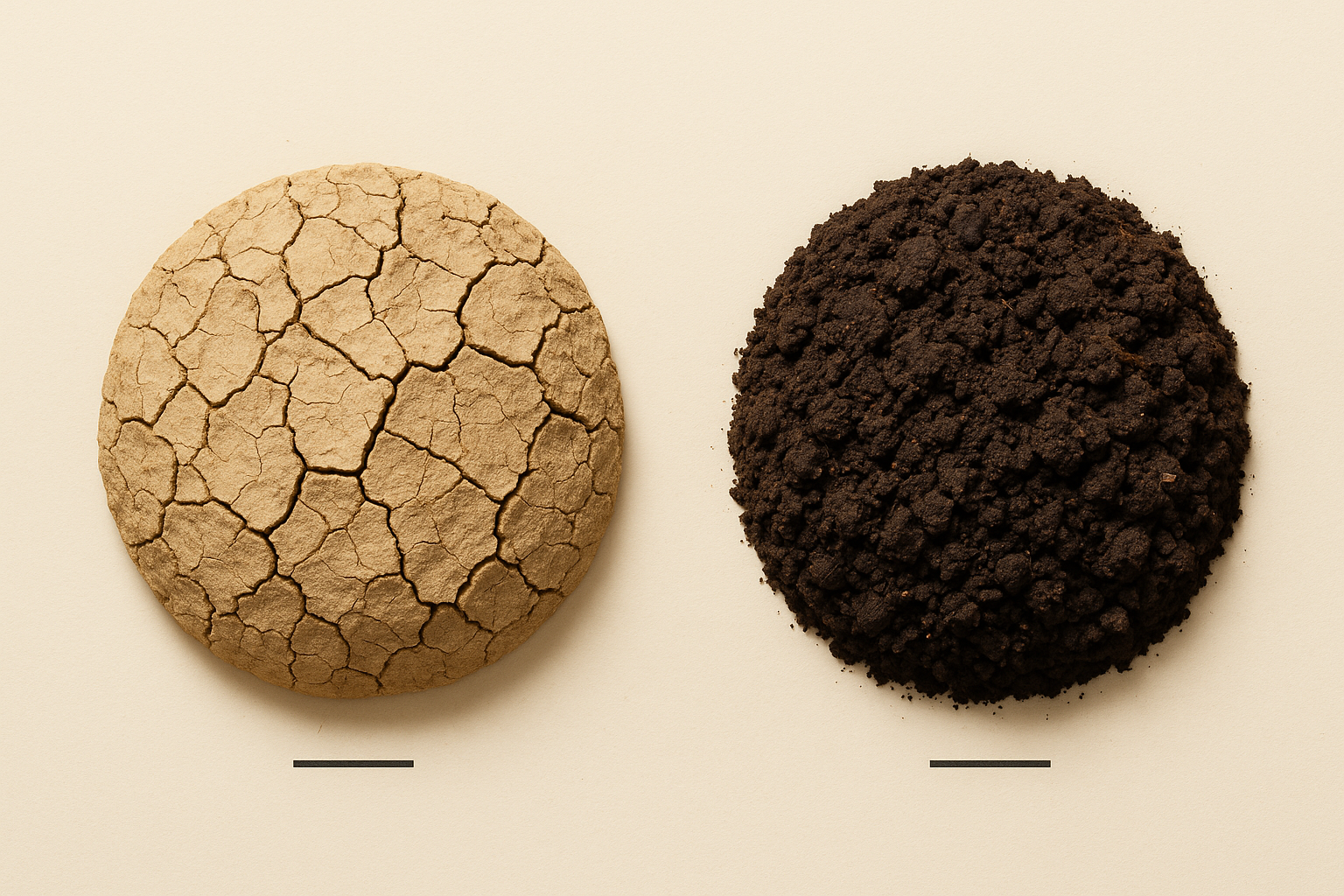
The paddock was producing wheat at a loss for twelve years before anyone counted the carbon leaving the soil. The farmer kept ploughing. The accountant kept the books. The auditor signed them off. The carbon left, the topsoil thinned, Steve’s Creek shortened from four months a year to three weeks — and none of it appeared on any line of any ledger anyone had agreed to read.

This is not a story about guilt. It is a story about ledgers — and who, until now, has been allowed to keep them. For seventy years food got cheaper at the supermarket because nobody was charging the supermarket for the topsoil, the watershed, the biodiversity, the climate. The savings were real. They were also borrowed, quietly, from the ground.

The ground is starting to ask for it back. Not as a threat. As an invoice. And for the first time in the history of farming, the invoice can be itemised — line by line, hectare by hectare, audited against the dirt itself. The contract that was missing for a hundred years is the one this magazine is about.

This is not a story about guilt. It is a story about ledgers — and who, until now, has been allowed to keep them.

Two soil specimens in paired trays · the left dust-grey and friable from forty years of conventional cropping · the right dark and crumbed with restored organic matter · the contract that was missing made visible
Paired specimens · the same hectare, twelve years apart. The left tray is what the planet has been paying for. The right tray is what the contract returns. FIG. 01 · THE LEDGER, MADE VISIBLE
Wholesale only · Section 708(8) and 708(11) of the Corporations Act 2001 (Cth). Retail accepted via Crowd-Sourced Funding through Swarmer (AFSL 507867). Not a product disclosure statement. Not financial advice. Past performance is not a reliable indicator of future performance. The Information Memorandum is the offer document.
03 / 16Why now

Three things just became true at the same time.

In a registrar’s office in Canberra, sometime in 2024, a clerk filed a soil-carbon attestation against a sheep farm in New South Wales. It was the first time the same document existed in three places at once: a government registry, an independent laboratory’s archive, and a public ledger any auditor in the world could read. Seventy years of unbooked work walked into the office that morning. By afternoon, it had a price.

The science arrived first. Carbon in the ground can now be measured to a tonne per hectare per year, by NATA-accredited laboratories, with the same precision the financial markets demand for any other commodity worth pricing. The instruments are real. The methods are published. The registers are public.

The rules followed. In January 2025, mandatory climate disclosure became the law of the Australian balance sheet — every Group-1 entity now has to account for what its supply chain does to the land. Capital is moving toward what can be audited. It is moving away from what can’t.

The technology made the rest possible. The same software that settles banks now settles farms. Every change, every measurement, every dollar — recorded permanently, visible to every party, immune to the editorial pass. The platform exists because the technology arrived. The window did not exist twenty-four months ago. It is open now.

Fresh Earth did not invent regenerative agriculture. It invented the contract that makes it pay. The next twelve pages walk the contract — the rails it runs on, the gate at Hillview, the auditor's clipboard, the treasury that compounds — in the order a reader new to all of it can carry them.

Wholesale only · Section 708(8) and 708(11) of the Corporations Act 2001 (Cth). Retail accepted via Crowd-Sourced Funding through Swarmer (AFSL 507867). Not a product disclosure statement. Not financial advice. Past performance is not a reliable indicator of future performance. The Information Memorandum is the offer document.
04 / 16What Fresh Earth is

Fresh Earth is not a farm. It is the rails underneath one.

Fresh Earth did not invent regenerative agriculture. The practices were already known, written down, taught in hedgerow workshops and university field stations a century before anyone called them regenerative. What was missing — for a hundred years — was the contract: a single, audited arrangement under which the farmer, the scientist, the supplier, the auditor, the buyer, and the investor could all read the same row of data and agree what it meant. Fresh Earth invented that contract. The platform is the contract running.

The contract carries eight kinds of work on one ledger. The Fund holds the land in commons inside an Australian-resident regulated trust. Operators do the farm work — recruited regenerative farm managers, paid via the project waterfall. Scientists design the blueprints on a digital twin of each farm. Suppliers provide materials and bid on inputs. Auditors verify each outcome — named labs, named bodies, on the chain. Buyers pay for the results — carbon, biodiversity, water, premium produce. Investors fund the system and hold units in the trust. Ambassadors carry the message into their communities and may receive additional company equity, subject to programme terms. Eight roles. One ledger. The architecture in plain order.

Four pieces interweave underneath. The Movement brings the demand — ambassadors, consumers, the cohort that wants its food on a ledger it can read. The Operating System is the rails: the contract running, eight roles in order. The Treasury is what each audited project leaves behind once every working hand has been paid; it acquires more land, completes more projects, compounds in commons. The Tokens sit downstream — FEVT for the verified profit, FEIT for the verified impact, both falling out of one audit. Movement creates the demand. The OS proves it. The treasury compounds it. The tokens carry it. Pull any one out and the others stop earning.

Fresh Earth did not invent regenerative agriculture. It invented the contract that makes it pay.

The eight on the rails · in plain order
Fundholds the land in commons · trust + Australian-domiciled holding entity · FIRB-clean
Operatorsdo the work · recruited regenerative farm managers · paid via project waterfall
Scientistsdesign blueprints · digital-twin selection · published method
Suppliersprovide materials · bid into the project · costs lock at Stage 03
Auditorsverify outcomes · named bodies · on-chain · no editorial pass
Buyerspay for results · carbon, biodiversity, water, premium produce
Investorsfund the system · hold units in the trust · own units of the engine
Ambassadorscarry the message · equity-aligned, not commission-aligned
Wholesale only · Section 708(8) and 708(11) of the Corporations Act 2001 (Cth). Retail accepted via Crowd-Sourced Funding through Swarmer (AFSL 507867). Not a product disclosure statement. Not financial advice. Past performance is not a reliable indicator of future performance. The Information Memorandum is the offer document.
05 / 16How a project works

Designed by experts. Provided by suppliers. Validated by operators. Verified on-chain. Monetised for investors.

The practice change is not a revolution. It is a recalibration — the kind that only works if the farmer believes it will, and the auditor can prove it did. A project on the operating system unfolds in seven stages, in this order, on every farm. The first four are digital. The agronomist tunes the blueprint on a digital twin of the farm before anyone has touched the dirt. The supplier bids into the project before any input has been ordered. The buyer contracts the outcome before any tonne has been sequestered. By the time the operator walks the paddock, the project is a working financial model with three independent signatures already on it.

Then the work begins. The operator implements the plan. The auditor arrives — the same auditor, on the same day every year — and brings a probe, a clipboard, and a number that didn’t exist twelve months ago. She slides the probe through the topsoil, withdraws the core, holds it to the light, files it. The marketplace settles what she found. The next blueprint learns from what was true. The library is open. Every farm trains the next.

The practice change is not a revolution. It is a recalibration — the kind that only works if the farmer believes it will, and the auditor can prove it did.

Seven stages, in order
  1. E
    01 · EvaluateDigital
    AI-enhanced read of the farm. Data feeds the digital twin. Scientifically credible, sourced from named labs.
  2. D
    02 · DesignDigital
    Scientists pick a blueprint and tune it for this farm.
  3. S
    03 · SupplyDigital
    Suppliers bid on the inputs. Costs lock.
  4. B
    04 · BuyDigital
    Buyers contract for the outcomes — carbon, beef, biodiversity, water.
  5. O
    05 · OperatePhysical
    Operators implement the plan on the ground.
  6. A
    06 · AuditPhysical
    Independent auditors verify what was actually done.
  7. M
    07 · MarketMarketplace
    Outcomes settle. Payments flow. The next blueprint learns.
Investment runs as a continuous thread alongside all seven stages.
Wholesale only · Section 708(8) and 708(11) of the Corporations Act 2001 (Cth). Retail accepted via Crowd-Sourced Funding through Swarmer (AFSL 507867). Not a product disclosure statement. Not financial advice. Past performance is not a reliable indicator of future performance. The Information Memorandum is the offer document.
06 / 16How money flows

Capital wins when the land heals.

Picture the treasury as a room with a single gate at one end. Money from the project — every tonne of carbon, every premium-produce contract, every biodiversity certificate — walks in through the wide end. Before it can rest, it has to pay its way. The agronomists are paid. The suppliers are paid. The operators on the ground are paid. The administration is paid. Then, and only then, eleven percent of the gross is paid up to the operating system that made all of this legible — the rate set in the licence agreement, the same rate on every project, in every country, forever.

What walks out the other side of the gate is the treasury’s share. It is what remains after every working hand has been paid. It compounds. It is not distributed. The way Fresh Earth earns more is not by changing the rate but by doing the work better — sharper blueprints, lower supplier costs, more co-benefits priced. Every saving flows to treasury. Every saving compounds. The gate is the discipline. The treasury is the patience.

The treasury is what remains after every working hand has been paid. It compounds. It is not distributed.

Every project’s gross revenue · 100% accounted for
60%Operating costsexperts + suppliers + operators2.5%Admin11%Licence feefixed · to FE group26.5%Net into treasuryresidual · compoundsRECONCILIATION · 100% gross − 60% costs − 2.5% admin − 11% licensing = 26.5% to treasury · then less tax · compounds in trust
Wholesale only · Section 708(8) and 708(11) of the Corporations Act 2001 (Cth). Retail accepted via Crowd-Sourced Funding through Swarmer (AFSL 507867). Not a product disclosure statement. Not financial advice. Past performance is not a reliable indicator of future performance. The Information Memorandum is the offer document.
07 / 16The investment thesis

You are buying the licence, not the country.

The soil holds three things now: carbon from the atmosphere, water from the sky, and a price from the market. Until twenty-four months ago, the third one didn’t exist. There was no instrument an ordinary investor could buy, no certificate they could hold, no contract whose name described what was actually happening to the land. The instrument exists now. It is not a token. It is not a fund. It is the company that owns the contract.

The contract is a licence. The licence is the operating system. Each country runs the same agreement — Australia today; the United Kingdom and the United States next; Argentina, Brazil, Canada, South Africa, the European Union onwards. The shape never changes. Twenty percent equity in the local licensee, plus eleven percent of every project’s primary fee, paid up to the company that owns the licence. The math is the same in every country. Each new licensee adds an income stream of identical shape — additive, not compounding within a country, but additive across them, and the catalogue of countries with farmland is finite and known.

That is the asset. Ordinary shares in Fresh Earth Universe Pty Ltd. The company that owns the licence the licensees pay to use. The architecture has three components — measurable, profitable, owned — three words that, until two years ago, were impossible to use together about the surface of the earth. The proof is not in the forecast. It is two creeks, six gates, and an auditor due back in October. Turn the page.

The soil holds three things now: carbon from the atmosphere, water from the sky, and a price from the market.

The three core elements · what Fresh Earth isMovement · OS · Currencies
01 · Demand
Movement

Demand creates the field.

The marketing engine. Ambassadors. Referral. The "Own change" wave. Ordinary people grow the movement; ownership follows the message.

02 · Rails
Operating System

Where regeneration becomes investable.

CUPM · the four-step ladder · open-source blueprints. Coordinates farmers, scientists, suppliers, operators, auditors and investors on one ledger.

03 · Value
Currencies

Verified value · economic + impact.

FEVT — the verified profit. FEIT — the verified impact. One audited project. One ledger for profit, one for healing — built so they can’t drift apart.

United · they create scale
The licence · ten identical tiles · one patternSameness is the asset
Live
AUS
Australia
+20%+11%
Next
NZ
New Zealand
+20%+11%
Next
USA
United States
+20%+11%
Next
UK
United Kingdom
+20%+11%
Forward
EU
European Union
+20%+11%
Forward
CAN
Canada
+20%+11%
Forward
ARG
Argentina
+20%+11%
Forward
BRA
Brazil
+20%+11%
Forward
ZA
South Africa
+20%+11%
Forward
+ N
and onwards
+20%+11%
Tiles in colour are live or near-term · dashed tiles are indicative future licensees · not guaranteed.
Wholesale only · Section 708(8) and 708(11) of the Corporations Act 2001 (Cth). Retail accepted via Crowd-Sourced Funding through Swarmer (AFSL 507867). Not a product disclosure statement. Not financial advice. Past performance is not a reliable indicator of future performance. The Information Memorandum is the offer document.
08 / 16The proof

The proof is on the dirt. Not in the forecast.

Seven farms across New South Wales, totalling 7,337.72 hectares, with independent audits in cycle. They sit along the Southern Tablelands and the New England — basalt-and-granite country, mixed grazing and cropping, watersheds that feed the Lachlan and the MacDonald. They were not built for a deck. They were already running the moment the operating system arrived to coordinate them. The infrastructure is real. The auditors have walked it. The carbon is in the ground.

Hillview Park. 1,167 ha · Woodhouselee NSW · verified and active · the flagship asset and the first to enter the new structure.

Cooksvale East. 346.51 ha · Peelwood NSW · active.

Cooksvale West. 1,079.30 ha · Wellington NSW · active.

Glenclair Aggregation. 4,209.88 ha · Bendemeer NSW · funding, the largest in the portfolio.

Lenore. 399.00 ha · Peelwood NSW · funding.

Talbingo. 392.17 ha · Bendemeer NSW · in planning.

Six of the seven are owned today by separate wholesale investors — the proof Fresh Earth can acquire, regenerate, and coordinate physical farms in the real economy. Every farm acquired going forward will run the new way: the operating system, the eleven percent licensing fee, the twenty percent equity in the local licensee. That is the platform this raise funds. Hillview Park is the first to walk through the gate.

Wholesale only · Section 708(8) and 708(11) of the Corporations Act 2001 (Cth). Retail accepted via Crowd-Sourced Funding through Swarmer (AFSL 507867). Not a product disclosure statement. Not financial advice. Past performance is not a reliable indicator of future performance. The Information Memorandum is the offer document.
09 / 16Hillview Park · the first asset

Hillview has a gate. On the other side of it, the accounting changes.

Lachlan Graham was named Australian Farmer of the Year in 2013, a decade before any of this had a price. He had been doing the work — rotational grazing, multi-species pasture, the slow accretion of soil under hooves and root — for years, on the same nine hundred and ten point eight six hectares of Southern Tablelands country he runs today. Two creeks slip through the property: Pejar to the south, Steve’s Creek to the north. Above the ridgeline, thirteen turbines of the Crookwell-3 wind farm turn under lease. The land has been earning its keep for a generation.

What changed in 2024 is that Hillview crossed onto the operating system. A five-hundred-and-ninety-hectare soil organic carbon project now sits inside its boundary, on a twenty-five-year cycle, registered with the Clean Energy Regulator and audited by Pangolin Associates. Lachlan stays on as operator under the Fresh Earth Land MIS — same hands on the land, paid via the project waterfall, not via licensee equity, not via FEVT units. The land moves into commons. The work continues, paid. The audit is independent. Same farm. Different ledger underneath.

Every project on Hillview pays the eleven percent licensing fee back to Fresh Earth Universe. That fee — multiplied by every farm that follows — is what the ordinary shares in this raise are pricing. Hillview is the first revenue stream of the platform. The rest of the network repeats its exact shape. The gate is the first audit. Everything after it is the long game.

Hillview has a gate. On the other side of it, the accounting changes.

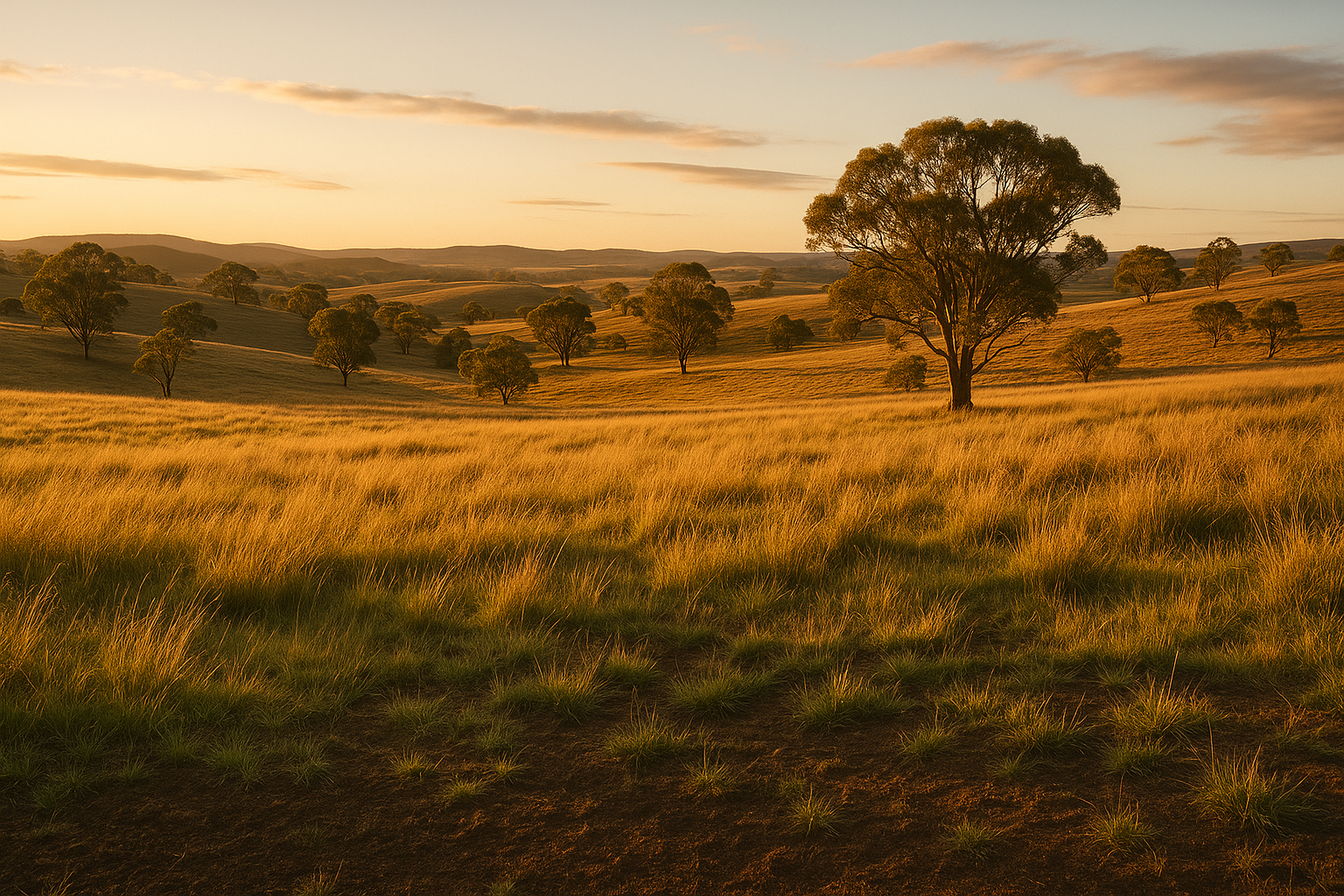
Hillview Park · Southern Tablelands NSW · golden grasslands at dusk · regenerating Australian farmland · no humans
Hillview Park · Woodhouselee NSW · golden hour · the first asset on the new structure.
Four facts
1,167 ha
Total area
590 ha
Soil-carbon project
147,028
Verified carbon credits forecast (25 years)
25 years
Project cycle
Wholesale only · Section 708(8) and 708(11) of the Corporations Act 2001 (Cth). Retail accepted via Crowd-Sourced Funding through Swarmer (AFSL 507867). Not a product disclosure statement. Not financial advice. Past performance is not a reliable indicator of future performance. The Information Memorandum is the offer document.
10 / 16How we engineer truth

We don’t just verify impact — we engineer it.

The auditor arrives on the same day every year. She brings a probe, a clipboard, and a number that didn’t exist twelve months ago. She walks the same transects she walked last year. She takes cores at the same coordinates. The lab she sends them to is NATA-accredited; the registry she files them with is operated by the Australian government. There is no editorial pass on a soil sample. There is the sample, the method, and the number.

Land has ten dimensions, and each has its own auditor or certifier. Carbon — Pangolin Associates and the Clean Energy Regulator. Biodiversity and water — Southern Cross University. Soil structure — Eurofins. Food and fibre quality — Eurofins nutrient panels. Land value — independent registered valuers. Net economics — external audit on published method. Improvement over time — temporal verification with chain of custody. Indigenous participation — recognised knowledge holders. Women in farming — programme audit on operator records. The list grows with the dimensions priced. Every name is real. Every accreditation is checkable.

Every measurement carries a trust tag. Green when it is independently certified. Amber when it is accurate but not yet certified. Red when it is modelled. The trust tag of any project is the lowest dimension’s tag — one weak input cannot be quietly rounded up. The minimum wins. That is the engineering. That is what makes the asset class an asset class.

The auditor arrives on the same day every year. She brings a probe, a clipboard, and a number that didn’t exist twelve months ago.

The ten dimensions · with named verification
  1. 01
    Carbon sequestration
    Pangolin Associates · Clean Energy Regulator
  2. 02
    Biodiversity condition
    Southern Cross University · BDU
  3. 03
    Water quality
    NATA-accredited laboratories
  4. 04
    Soil health
    Eurofins · Southern Cross University
  5. 05
    Land value in backing
    Independent registered valuers
  6. 06
    Food and fibre quality
    Eurofins · nutrient density panels
  7. 07
    Net economics
    External audit · published method
  8. 08
    Improvement over time
    Temporal verification · chain of custody
  9. 09
    Indigenous participation
    Recognised knowledge holders
  10. 10
    Women in farming
    Programme audit · operator records
The trust-tag rule · GREEN · AMBER · RED

The trust tag of any project is the lowest dimension’s tag. If one of ten reads Amber, the project reads Amber. If one reads Red, the project reads Red. The minimum wins.

Wholesale only · Section 708(8) and 708(11) of the Corporations Act 2001 (Cth). Retail accepted via Crowd-Sourced Funding through Swarmer (AFSL 507867). Not a product disclosure statement. Not financial advice. Past performance is not a reliable indicator of future performance. The Information Memorandum is the offer document.
11 / 16The treasury

As the land heals, the treasury compounds.

Compounding, on a farm, is slow at first. The first cohort of cattle move through the new rotation. The cover crop goes in. The earthworms come back. A year passes, sometimes two, before the lab can find the carbon in the core. Then it finds a tonne. Then three. Then six. The land is on its own clock — but the ledger underneath it is on the market’s, and the market is patient when it can see what it is buying.

The treasury runs on the same patience. Revenue from one project acquires more land. More land completes more projects. More projects grow the treasury’s holdings. Each unit becomes worth more. The loop repeats. Nothing is distributed. Everything stays in the Earth Treasury — held in commons by the trust on behalf of every unit-holder, protected for the next ten generations because the structure won’t let the land be sold.

Four axes feed each other. Blueprints get smarter — every audited actual from Stage 06 trains the next iteration of the blueprint, and what took months on farm one takes weeks on farm ten. Costs reduce — sharper design means lower supply and tighter operate, and because the eleven percent licensing fee is contractually fixed, every cost saving flows past the fee and into the treasury. Co-benefits multiply — one regenerative practice produces carbon, biodiversity, water, soil, and produce revenue simultaneously: five verified streams from the same act of healing. Returns compound — Berkshire-style, never paid as a coupon. Eventually, the treasury generates enough on its own to acquire new farms without issuing a single additional FEVT unit. That is the compound the structure is built for.

As the land heals, the treasury compounds. Held in commons. Protected forever for humanity.

The same paired soil specimens · returning · the right tray now itemised — carbon, biodiversity, water, food and fibre quality, indigenous participation, women in farming · each priced, each paid, each compounding in the treasury
The right tray, returning. Each gain in the second specimen — carbon, structure, microbial weight — is a line in the treasury that didn’t exist twelve months ago. FIG. 02 · WHAT COMPOUNDS
Treasury growth · the compounding loopIndicative · forecast · not guaranteed
Y0Y2Y4Y6Y8Y10BlueprintsCosts savedCo-benefitsReturnsTreasury index · cumulative · structurally locked, magnitudes illustrative
The four axes, named
  1. Blueprintsget smarter — every audited actual trains the next blueprint.
  2. Costsreduce — sharper Design, lower Supply, tighter Operate.
  3. Co-benefitsmultiply — one practice change, five verified streams: carbon, biodiversity, water, soil, produce.
  4. Returnscompound — Berkshire-style, never paid as a coupon.
Wholesale only · Section 708(8) and 708(11) of the Corporations Act 2001 (Cth). Retail accepted via Crowd-Sourced Funding through Swarmer (AFSL 507867). Not a product disclosure statement. Not financial advice. Past performance is not a reliable indicator of future performance. The Information Memorandum is the offer document.
12 / 16The two tokens

The token is not a metaphor. It is a deed. It is a ledger entry. It earns.

Two tokens sit downstream of the operating system this raise funds. Neither token is part of this raise. They run in parallel — not as subsets — because the regulated trust holds the economic rights, and the public ledger records the verified impact, and the same audited project produces both. One project. Audited once. Scores both. They cannot drift apart, because the audit is the spine. The token is not a metaphor. It is a deed. It is a ledger entry. It earns.

Side one · economic

Fresh Earth Value Token (FEVT)

FEVT unit-holders own units in the Fresh Earth Land MIS — an Australian-resident regulated trust. The MIS controls a separate Australian-domiciled land-holding entity that holds the registered cadastral title. The land-holding entity owns the land. The MIS owns the land-holding entity. FEVT unit-holders own units in the MIS. Held in commons. Protected forever.

FIRB-clean by structure: international wholesale capital welcome, no foreign-ownership friction. The trust holds the title; FEVT unit-holders hold the economic rights.

Two things back the unit, and both compound. The land itself — title held by the trust, held in commons, the kind of permanence the deeds office files but the market rarely reads. And the residual that flows into the trust each year, after every cost has gone out: the operators paid, the experts paid, the suppliers paid, the 11% licence fee remitted to Fresh Earth, admin met, tax settled. What’s left is the net to treasury, and it compounds quietly, year on year, the way a soil profile thickens — invisibly at first, then unmistakably, as the cohort of restored farms grows and the operating system underneath each one becomes more practised, cheaper, surer. The portfolio appreciates because the audit holds, and because the network keeps lengthening.

Four-layer trust · top to bottom
  1. 4
    FEVT unit-holders
    foreign or domestic · wholesale
  2. 3
    Fresh Earth Land MIS
    Australian regulated trust
  3. 2
    Land-holding entity
    Australian-domiciled · holds cadastral title
  4. 1
    The land
    held in commons · protected forever
Responsible Entity · Primary Securities Ltd · AFSL 224107 · s601EA. First raise indicative · Hillview Park · A$22M target.
Side two · impact

Fresh Earth Impact Token (FEIT)

FEIT is the verified record of healing across ten dimensions, made tradeable on a fair-launched marketplace. Carbon. Biodiversity. Water. Soil. Land value. Food and fibre quality. Net economics. Improvement over time. Indigenous participation. Women in farming.

Fair-launched. Public. No pre-mine. Not an investment. Not a security. The receipt for healing the world — open to anyone who pays for the work.

Ten dimensions · the impact set
CarbonBiodiversityWaterSoilLand valueFood & fibreNet economicsTimeIndigenousWomenLand hasten dimensions

FEVT is a fractional beneficial interest in the fund. Not a parcel of land. Not a deed on a single hectare.

Wholesale only · Section 708(8) and 708(11) of the Corporations Act 2001 (Cth). Retail accepted via Crowd-Sourced Funding through Swarmer (AFSL 507867). Not a product disclosure statement. Not financial advice. Past performance is not a reliable indicator of future performance. The Information Memorandum is the offer document.
13 / 16The movement

Across the continent, the calculations are beginning. The land is beginning to pay its own way.

The first lab in Lismore runs the soil cores; the second in Albury runs the water. A registrar in Canberra files the carbon attestation. A buyer in London signs the off-take. A worm turns through a paddock outside Crookwell and is, for the first time, an entry on the same ledger that records the off-take. Across the continent, the calculations are beginning — quietly, transect by transect, ledger entry by ledger entry — and the land is beginning to pay its own way. Six portals sit on one ledger. The evaluator and the operator, the supplier and the buyer, the expert and the investor — each reads the same row, and each row means the same thing. No-one outranks the audit. The truth is in the ledger.

  1. Evaluatorsdesign the project, then audit the result. Score every dimension on the same rubric. Stand outside the operating company; the audit cannot be bought.
  2. Expertsagronomists, scientists, ecologists. Engaged per project. Paid from the project waterfall, independent of the licensee equity.
  3. Suppliersinputs and services. Real invoices, real costs. Paid out of the project the way any working farm pays its suppliers.
  4. Operatorsrecruited regenerative farm managers. Contracted by the treasury. Paid by verified results, not by a fixed fee or a hopeful forecast.
  5. Investorsfund the rails. Hold ordinary shares in the operating company, or, on a separate downstream raise, units in the trust on whose behalf the land is held in commons.
  6. Buyerscarbon and biodiversity credits, beef, food, fibre. B2B off-take contracts at large-agri scale; not direct-to-consumer.

Around the six portals, the movement does its other work. Landholders sell in and stay, or sell in and exit; the land moves into commons either way. Ambassadors carry the message — joining is free, no investment required, and eligible referrers may receive additional company equity in Fresh Earth Universe Pty Ltd for successful referrals, subject to programme terms. Women in farming and Indigenous wisdom are recruited through the portals — recognised as disciplines, paid as disciplines. Founding ambassadors are the first call when FEVT is issued. Ambassadors carry the message; ownership follows the message. The library is open. Every farm trains the next.

Across the continent, the calculations are beginning. The land is beginning to pay its own way.

Wholesale only · Section 708(8) and 708(11) of the Corporations Act 2001 (Cth). Retail accepted via Crowd-Sourced Funding through Swarmer (AFSL 507867). Not a product disclosure statement. Not financial advice. Past performance is not a reliable indicator of future performance. The Information Memorandum is the offer document.
14 / 16The team

Built by farmers, scientists, technologists, and operators.

Each of the six co-founders has, between them, the kind of credit no slide can manufacture: years of working land, working capital, and working method. They built the proof first. The platform is what they wrote down so others could repeat it.

Luke Makepeace is Co-Chief Executive Officer and Creative Director — the original architect of the Fresh Earth concept and the operating-system thesis. He owns the design of the contract. Lachlan Graham is Head of Regenerative Farming, Australian Farmer of the Year 2013, and the operator of Hillview Park — the first asset on the new structure. He owns the working precedent on the dirt. Luke Star is Chief Financial Officer — the architect of the capital stack and the trust structure. He owns the spine of the financial architecture. Paul Taylor is Chief Science Officer — responsible for the verification framework and the digital twin. He owns how the truth is engineered. Bob Bell is Strategic Advisor — long-form regenerative agriculture and rural-economy counsel. He owns the institutional memory. Ben Nott is Chief Marketing Officer — the public voice of the movement, and the man whose Saatchi-trained ear keeps the language honest.

Officers and operations
  1. Steve WhiteCo-Chief Executive Officer · Commercialisation Director
  2. Ben WillisChief Legal Officer
  3. Burak CankurtaranChief Technology Officer
  4. Chris ParksInvestment Management
  5. Russell RankinIndustry Relations
  6. Agatha MakepeaceDirector of Business Operations
  7. Simon SkillicornBusiness Development and Strategic Partnerships
Wholesale only · Section 708(8) and 708(11) of the Corporations Act 2001 (Cth). Retail accepted via Crowd-Sourced Funding through Swarmer (AFSL 507867). Not a product disclosure statement. Not financial advice. Past performance is not a reliable indicator of future performance. The Information Memorandum is the offer document.
15 / 16The ask

A$1.5 million. To scale the rails.

We are raising one and a half million Australian dollars on a fifteen-million pre-money valuation, closing the thirtieth of June 2026. The instrument is ordinary shares in Fresh Earth Universe Pty Ltd — the master licensor of the operating system, the holding company on whose books the contract sits. The dilution is approximately 9.1%. The capital funds the platform that earns the 11% licensing fee on every project, in every country, in perpetuity. This is the first formal capital under the new structure.

Wholesale capital is accepted under Section 708(8) and 708(11) of the Corporations Act 2001, with a minimum of A$50,000. Retail capital is accepted via Crowd-Sourced Funding through Swarmer (AFSL 507867), with a minimum of A$500. Same shares. Same class. Same rights. The minimum is the only difference; the company is the same.

Not a SAFE. Not a convertible note. Not a token sale. Ordinary shares in the company that owns the licence the licensees pay to use. Held in commons. Audited annually. Ratchet-locked into the same structure that protects the land.

Instrument
Ordinary shares in FEU
Pre-money
A$15,000,000
Raise size
A$1,500,000
Wholesale minimum
A$50,000 · s708(8)/(11)
Retail minimum
A$500 · Swarmer · AFSL 507867
Closing
30 June 2026
Contact
Luke Star · luke.s@freshearth.io
Document
Information Memorandum on request
Use of funds
Verification scale35%
Auditor capacity, lab partnerships, on-chain settlement infrastructure.
Platform engineering28%
Portals for designers, suppliers, operators, auditors, buyers.
Operating runway22%
Eighteen months · core team · governance · compliance.
Country licensee onboarding15%
Beachhead in the United Kingdom or United States. Template set down for the next country.
Allocation guidance · subject to board direction · further detail in the Information Memorandum.
Wholesale only · Section 708(8) and 708(11) of the Corporations Act 2001 (Cth). Retail accepted via Crowd-Sourced Funding through Swarmer (AFSL 507867). Not a product disclosure statement. Not financial advice. Past performance is not a reliable indicator of future performance. The Information Memorandum is the offer document.
16 / 16Close

One infrastructure. Every type of land that can be counted, measured, and priced. This is the long game.

The paddock that was producing wheat at a loss for twelve years is now producing carbon at a profit. The auditor has been. The number has been filed. The buyer has paid. The treasury has the margin. None of these sentences could be written, in this order, twenty-four months ago. They can be written today. In ten years, every regenerating hectare on earth will be priced, audited, and traded on rails. We are the rails.

Seven farms are already on the ledger. The first FEVT issuance is being prepared on Hillview Park. The verification framework is named. The structure is FIRB-clean by design. The Information Memorandum is the offer document, and Luke Star holds the contact line. This raise is the first formal capital under the new structure — ordinary shares in Fresh Earth Universe Pty Ltd, the company that owns the contract that makes regenerative agriculture pay.

Soil. Water. Biodiversity. Climate. Food and fibre. Animals. People. Indigenous knowledge. Each measured by name. Each priced. Each entered on the ledger that began, twelve months ago, with a single soil core. Across the continent, the calculations are beginning. The land is beginning to pay its own way.

For a century, ordinary people who wanted to back regeneration could give the work money, but they could not own a share of what their money healed. Donating helps. Owning compounds. The instrument exists. The audit is independent. The contract pays. We priced what was kept off the books.

Request the Information Memorandum

Luke Star · luke.s@freshearth.io · freshearth.world
A$1.5M · A$15M pre-money · ordinary shares · closing 30 June 2026

Food security today. Climate solution at scale. Biodiverse forest as the long-horizon endpoint. One infrastructure. Every type of land that can be counted, measured, and priced. This is the long game.

Fresh Earth — The First Data-Verified Regenerative Land O.S. on Earth.

Fresh Earth · canonical figure-8 lockup · green outer ring · gold middle ring · brown inner ring · the three-stripe lemniscate that locks the brand
Land · Operating System · Capital
Wholesale only · Section 708(8) and 708(11) of the Corporations Act 2001 (Cth). Retail accepted via Crowd-Sourced Funding through Swarmer (AFSL 507867). Not a product disclosure statement. Not financial advice. Past performance is not a reliable indicator of future performance. The Information Memorandum is the offer document.